


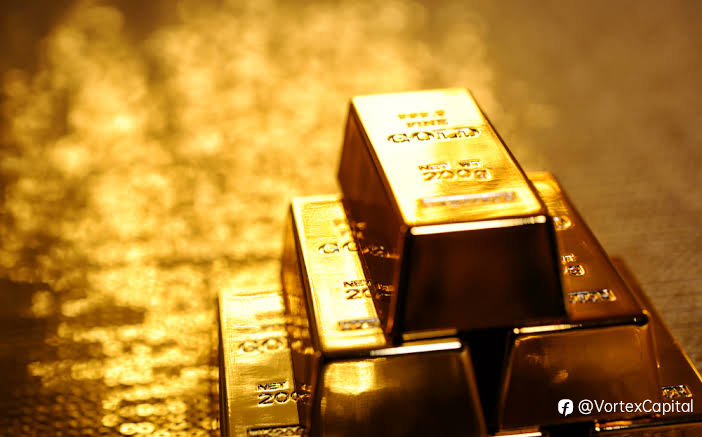
Gold prices rose on Wednesday, holding near the $4,400 per troy ounce level as uncertainty over a potential U.S.-Iran agreement to reopen the Strait of Hormuz pushed oil prices higher, while investors awaited U.S. inflation data that could shift expectations for Federal Reserve policy.
At 09:12 WIB, XAU/USD rose 0.7% to $4,398.92 per troy ounce, while Gold Futures gained 0.4% to $4,458.62. XAG/USD rose 0.6% to $65.07 per troy ounce, while XPT/USD gained 0.5% to $1,750.91.
Hormuz Uncertainty Lifts Oil Prices, Keeping Focus on the Fed’s Rate Outlook
Gold remains supported near a two-month high as investors reassess the possibility of an agreement to reopen the Strait of Hormuz. Pakistan’s defense minister said Washington and Tehran were close to reaching a deal, while reports of further talks between Oman and Iran suggested that diplomatic efforts were still underway.
However, Iran insists that the waterway will remain closed until the U.S. meets its demands, including lifting the blockade on Iranian ports and providing compensation for damage caused by U.S. military strikes.
These mixed signals have kept energy markets volatile. The U.S. and Iran-aligned Houthi forces in Yemen reported separate attacks on vessels in the Strait of Hormuz and the Bab el-Mandeb, while U.S. Navy helicopters fired missiles at a Panama-flagged cargo vessel attempting to transit the Gulf of Oman.
Drone attacks also targeted an oil refinery in Libya.
For gold, the inflation implications remain a key factor. Higher energy prices could encourage the Federal Reserve to keep interest rates elevated for longer, increasing the opportunity cost of holding non-yielding gold.
CPI, Chinese Buying, and Technical Resistance Set the Next Test
Investors are now awaiting Wednesday’s U.S. Consumer Price Index (CPI) data, followed by Producer Price Index data on Thursday. A weaker-than-expected reading could reduce pressure on the Fed to tighten policy, while a hotter-than-expected figure could revive expectations for a rate hike.
Markets are holding back from taking aggressive positions ahead of the CPI release, with swap markets pricing roughly even odds of a 25-basis-point rate hike in September.
Meanwhile, the People’s Bank of China increased its gold reserves for the 21st consecutive month in July, adding approximately 640,000 troy ounces to reach 76.08 million troy ounces. China-based gold ETFs have also continued to attract buyers, reinforcing the stronger institutional demand seen in recent weeks.
Tony Sycamore, senior market analyst at IG, said gold’s latest decline from $4,435 reflected profit-taking ahead of the CPI report, hawkish Federal Reserve commentary, and a renewed rise in energy prices.
Sycamore said gold is now facing descending trendline resistance around $4,460, drawn from the late-January record high near $5,602, while the 200-day moving average around $4,495 further strengthens this resistance zone.
He said gold needs a sustained breakout above both levels to pave the way for a stronger recovery toward $5,000.
Tuyên bố miễn trừ trách nhiệm: Quan điểm được trình bày hoàn toàn là của tác giả và không đại diện cho quan điểm chính thức của Followme. Followme không chịu trách nhiệm về tính chính xác, đầy đủ hoặc độ tin cậy của thông tin được cung cấp và không chịu trách nhiệm cho bất kỳ hành động nào được thực hiện dựa trên nội dung, trừ khi được nêu rõ bằng văn bản.
 Chưa có bình luận nào. Hãy là người đầu tiên chia sẻ ý kiến của bạn.